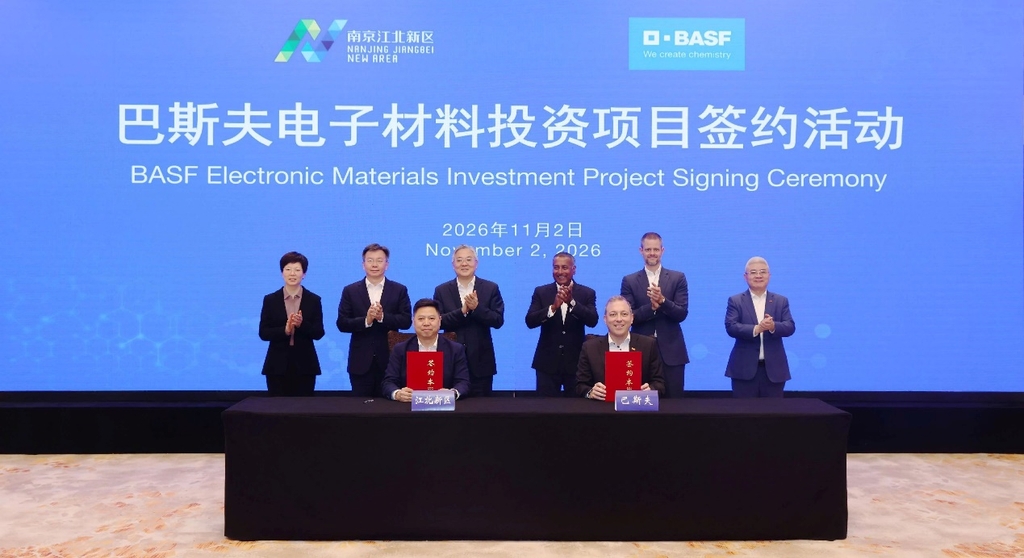
BASF, a global chemical leader, has signed an investment agreement with Nanjing Jiangbei New Area to develop a new production base for electronic materials within Jiangbei New Materials Science and Technology Park. The facility will expand BASF’s semiconductor materials supply capacity for the Yangtze River Delta, with operations expected to come on stream by the end of 2028. Senior leaders of Nanjing met with a delegation headed by Gops Pillay, President, Global Operating Division of BASF, and Jens Liebermann, Senior Vice President and head of BASF’s Global Electronic Materials business, and witnessed the signing ceremony.
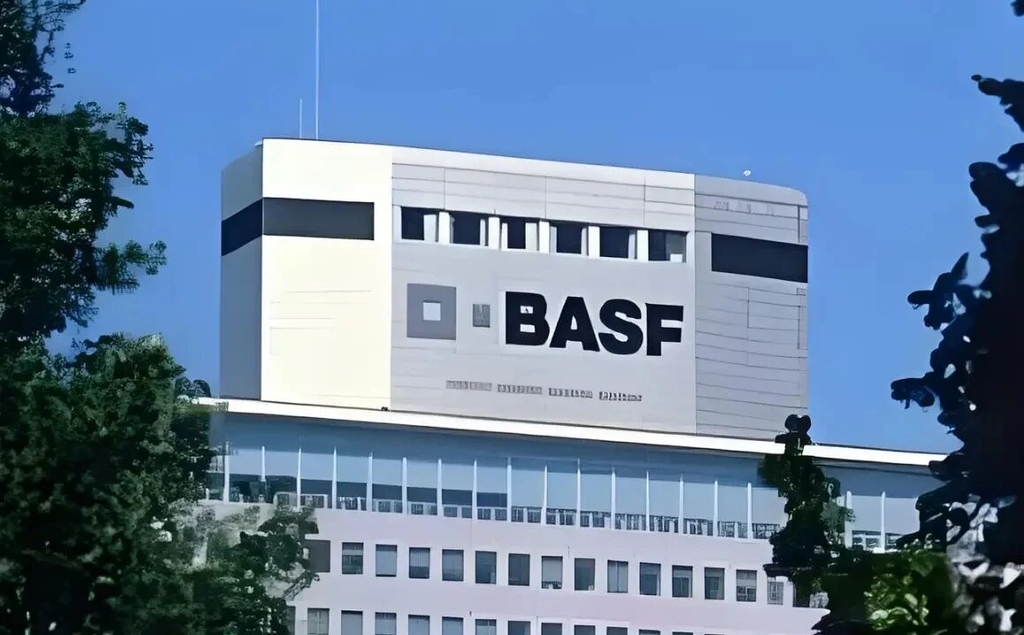
Headquartered in Ludwigshafen, Germany, BASF is a world-leading integrated chemical company and a benchmark for Sino-German industrial collaboration. After more than two decades in Nanjing, BASF has made Jiangbei New Materials Science and Technology Park a core hub for its Asia-Pacific operations, with cumulative investment reaching nearly RMB 39 billion. The BASF‑YPC integrated joint venture (Yangzi Petrochemical–BASF), founded in 2000, has undergone multiple rounds of capacity expansion, and the new site will be constructed adjacent to the existing plant. This project extends BASF’s Nanjing business from mature specialty chemicals into high-value upstream electronic materials for the semiconductor industry.
Nanjing continues to advance its petrochemical, advanced materials, and integrated circuit industries, driving its traditional chemical sector toward high-value electronic chemicals and upstream semiconductor supplies. Jiangbei New Area is home to 209 integrated circuit enterprises, which posted total industrial output of RMB 52.7 billion in 2025. The cluster covers the full value chain: substrates, epitaxy, devices, packaging, modules and end applications, laying a solid foundation for large-scale manufacturing of high-purity electronic chemicals. Electronic materials require stringent purity control and are best supplied over short distances; locating production close to chip fabs is standard industry practice. BASF’s new facility will fill a key gap in the local semiconductor supply chain and provide localized material supply to chip manufacturers across the region.
From specialized industrial parks to efficient logistics networks, Nanjing offers stable, predictable operating conditions for foreign-invested projects. Supported by a robust industrial base and logistics networks spanning the Yangtze River Delta, the city continues to improve its business environment. This investment stands as further proof of Nanjing’s success in attracting high-end foreign capital through its complete industrial supply chain capabilities. As cooperation expands from specialty chemicals into core semiconductor materials, Nanjing’s industrial support capabilities are moving further up the value chain.
Pillay and Liebermann noted that the investment represents a key milestone under BASF’s “local production for local markets” strategy. Leveraging the comprehensive industrial ecosystem of Jiangbei New Area, the new site will bolster BASF’s production, supply chain, and technical service network in East China, enabling the company to better meet the rapidly growing materials demand from China’s semiconductor sector.