
It appeared to outsiders to be simply another Chinese offshoot of a multinational automaker. Now, standing in the showroom of BMW (Nanjing) Information Technology, President and CEO Qi Haifei summed up the change in one sentence: “We used to look to Munich. Now Munich is looking to us.”
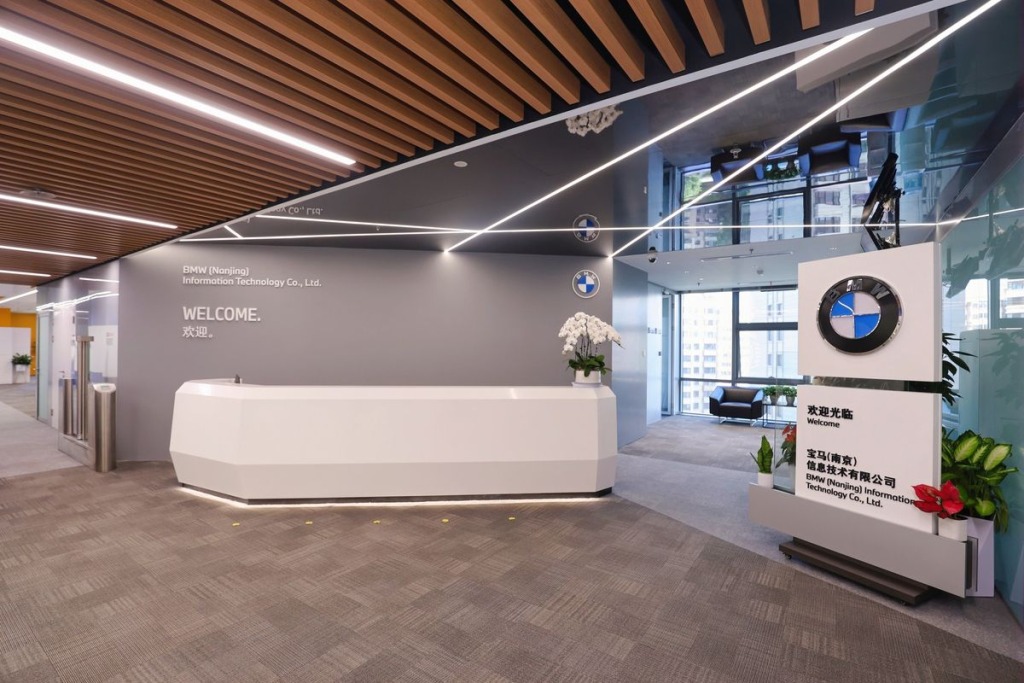
The company evolved from the Nanjing branch of LingYue Information Technology and became a wholly owned BMW subsidiary in 2025.
After BMW Brilliance Automotive signing an agreement with Nanjing’s Jianye District in July 2025, it opened for business that October, the start of its operation as an independent legal entity.
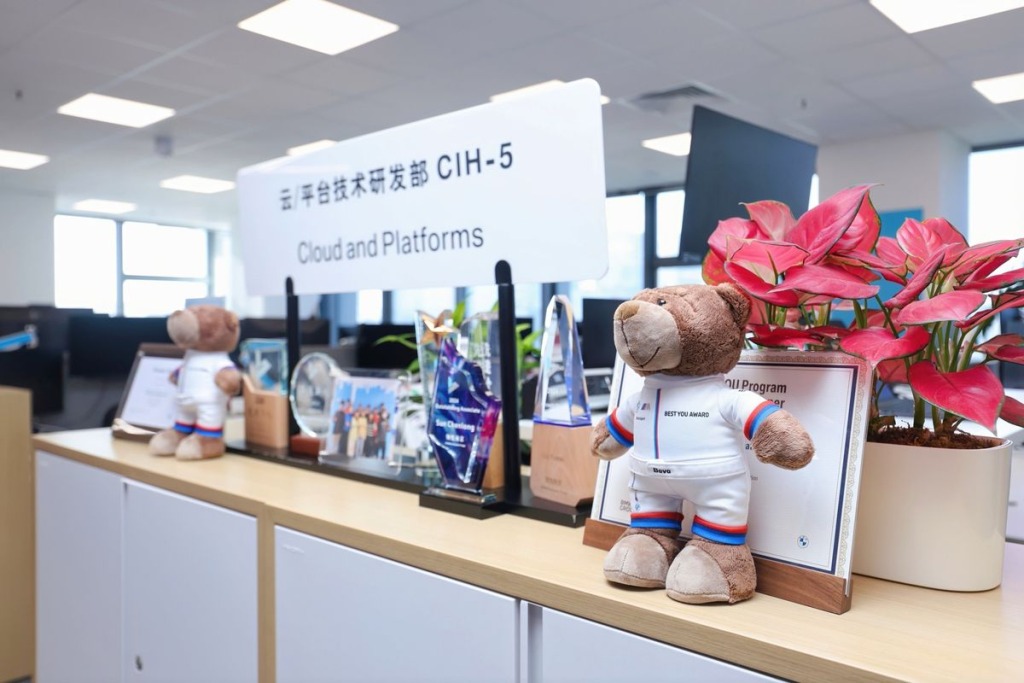
Over the past year, however, that flow of innovation has increasingly become a two-way exchange, with Munich actively looking to Nanjing for ideas and solutions in digitalization, AI and software development.
The shift reflects a broader transformation within foreign enterprises, changing from “In China for China” to “In China for the world”.
Nanjing Solutions Going Global
As BMW’s Neue Klasse generation enters the market, the Nanjing IT Hub is providing critical digital capabilities to support the localization and industrialization of the new BMW iX3 and BMW i3 in China.
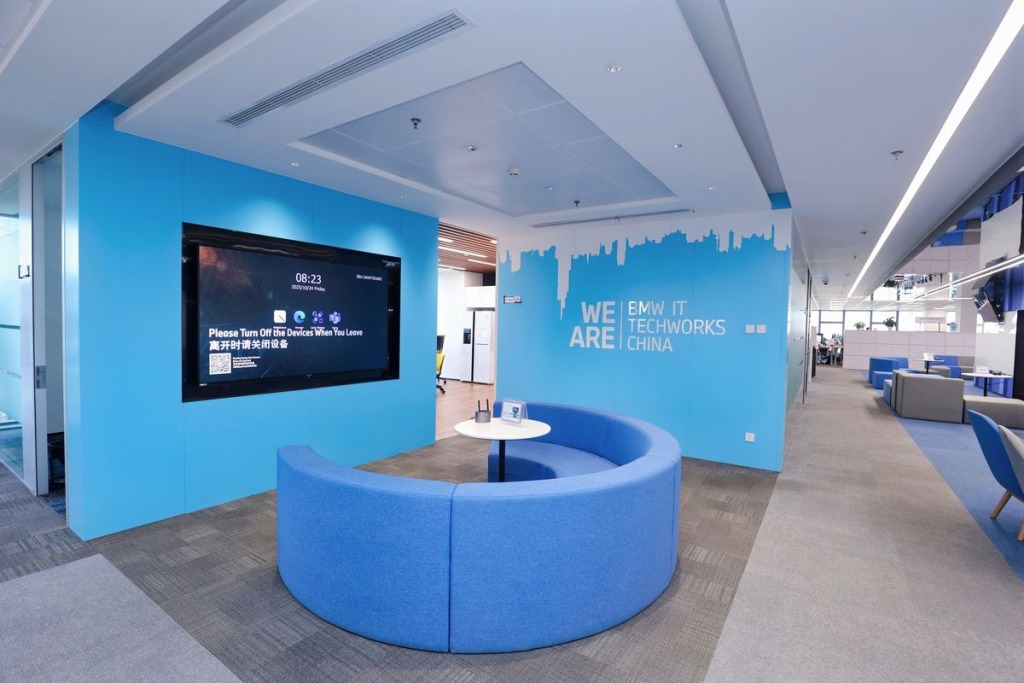
At the company’s Embodied AI Laboratory, a dual-arm robot is demonstrating the assembly of electronic control units (ECU). The arm on the right reaches into a bin, picks up a metal bracket, flips and positions it, and places it smoothly into a fixture. The arm on the left then picks up the ECU and positions it in the correct place.
The setup replicates an actual production process at BMW factories around the world. Even in highly automated vehicle manufacturing, ECU assembly is one of the many intricate operations that still rely on manual labor. A single vehicle may use numerous ECUs in different shapes and sizes, each of which must undergo a series of steps before entering the final assembly line, including fitting the appropriate bracket, aligning mounting holes, and tightening screws.
“Data from every grasping and assembly movement is collected in real time and used to continuously optimize the model,” said Fan Mengfei, an AI engineer at the Nanjing office. So far, the robotic assembly solution has achieved a success rate of more than 93% in laboratory tests. In the coming years, this solution being developed in Nanjing is expected to be deployed across BMW’s global production network.
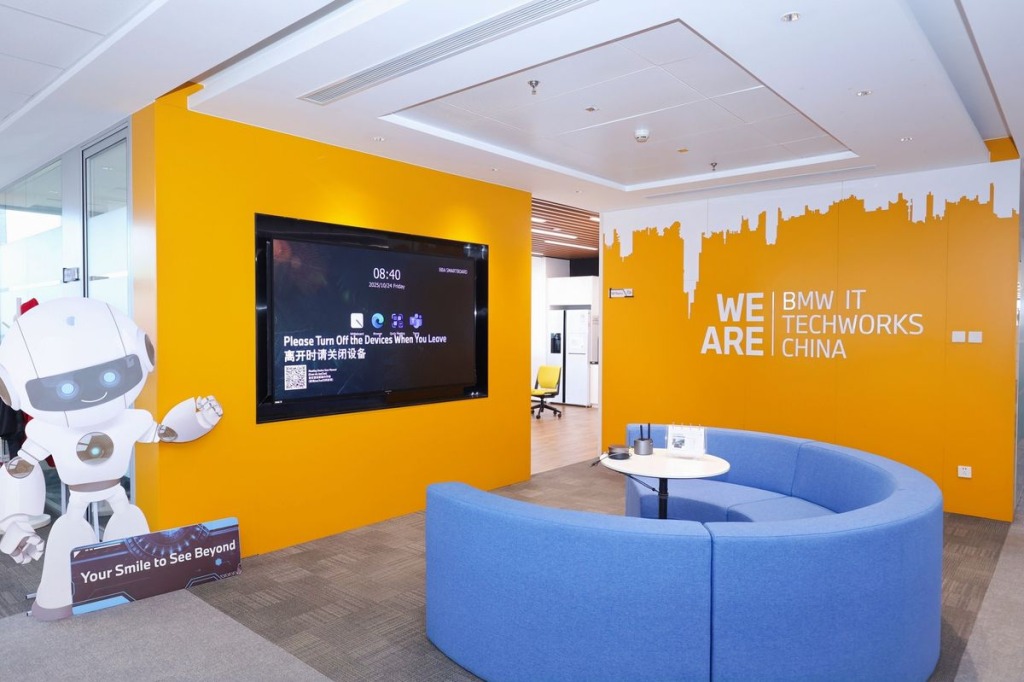
At a broader level, the Nanjing team’s digital solutions are also expanding into BMW’s global supply chain operations.
Take BMW’s Shenyang plant, for example. It handles up to 10 million components every day, with suppliers spread across the globe. A component may begin its journey at a European port and then travel by road or rail to the plant. With such a long supply chain and so many variables, any disruption can potentially affect downstream production.
The Nanjing team thus developed an AI-powered solution for logistics forecasting and planning, which is now being gradually adopted across BMW’s global logistics and supply chain operations.
Nanjing’s Appeal
In the first half of 2026, 27-year-old Fan Mengfei returned from Munich and joined BMW (Nanjing) Information Technology. She earned her master’s degree from the Technical University of Munich and previously worked on BMW’s robotics team in Munich. She cites the Yangtze River Delta’s mature robotics ecosystem and Nanjing’s quality of life as key reasons for returning to China.
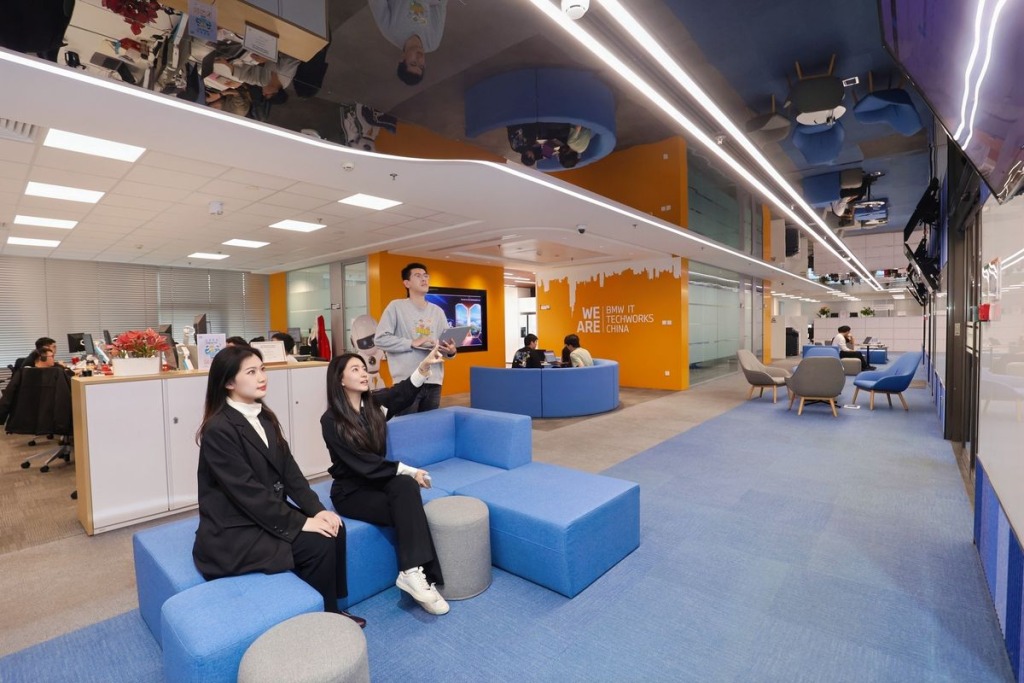
Many of her peers at the Nanjing team share similar education backgrounds. One software engineer who relocated from Shenyang to Nanjing said the city “offers a comfortable environment to work, enjoy family life, and pursue career development”.
The inflow of talent is a reflection of Nanjing’s appeal.
Nanjing is home to a wealth of higher-education resources, and BMW (Nanjing) Information Technology has established in-depth industry-academia-research collaboration with local universities including Nanjing University and Southeast University. In 2025, Nanjing’s software industry generated more than one trillion yuan in revenue, up nearly 17% year on year, making it the city’s first trillion-yuan-level industry. The sector ranks first in Jiangsu and fourth nationwide.
In Jianye District, the core industries of the digital economy generated nearly 57 billion yuan in revenue, up over 12% year on year. The Hexi Central Innovation Zone has been incorporated into Nanjing’s core innovation network. From rent reductions to subsidies for R&D and computing-power and incentives for commercialization, a range of policies is providing tangible support for innovative companies.
In China for the World
As the only BMW IT Hub in China and the largest in Asia, BMW (Nanjing) Information Technology was never intended to serve China alone. It is one of BMW’s six global IT Hubs.
“Focusing on key technologies such as AI and industrial digitalization, we have developed a range of digital solutions tailored to real business needs. They have been put to practice across BMW’s R&D, production, supply chain, sales, and service operations in China, while also becoming part of BMW Group’s global IT network, supporting BMW operations in international markets,” said Qi Haifei.
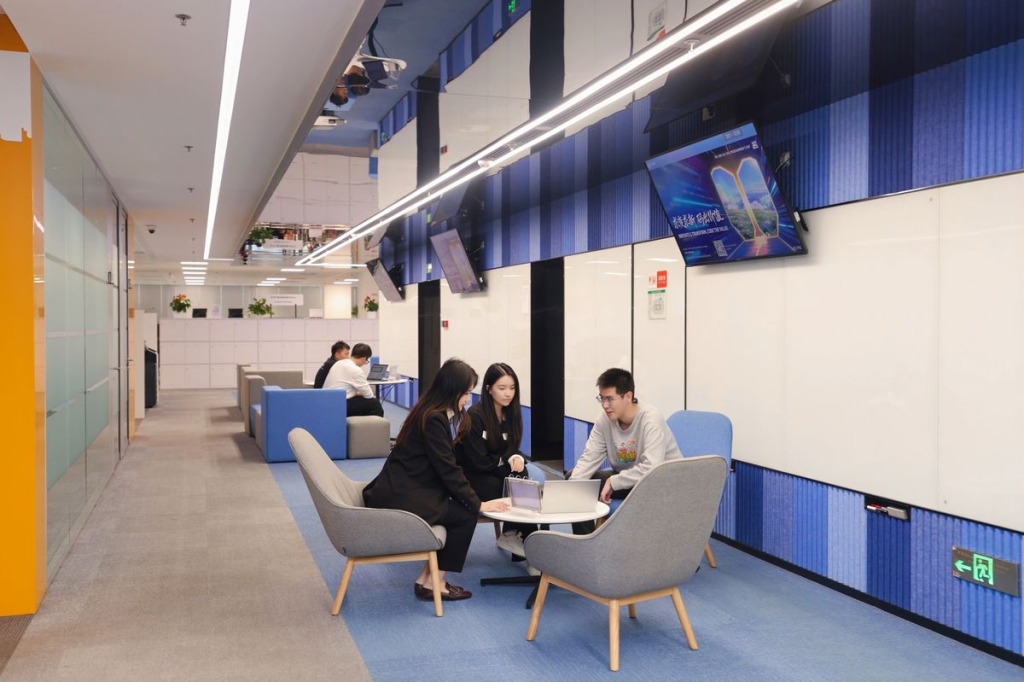
Following the transition from “In China for China” to “In China for the world” BMW (Nanjing) is emerging as an important location in BMW’s global innovation network. Behind this evolution is Nanjing’s sustained efforts to establish itself as a strategic hub for BMW’s global digital operations. From LingYue Information Technology to BMW (Nanjing) Information Technology, BMW has continued to increase its investment in Nanjing, viewing the city as a strategic base for its global digital operations.
To invest in Nanjing is to invest in the future. One year is enough for a seed to take root. For BMW and Nanjing, the next chapter is only beginning.