
Nanjing Port’s Longtan terminal has recently launched a new ro-ro foreign trade route linking Nanjing and Europe. The Guangrong, a newly built ocean-going ro-ro vessel, set sail carrying 1,530 Chinese-made new energy vehicles. It is bound for the Port of Barcelona, Spain, and the Port of Zeebrugge, Belgium. The launch further boosts Nanjing Port’s capacity for seaborne vehicle exports and creates a new direct river-sea shipping corridor for automakers in the Yangtze River Delta and other manufacturers along the Yangtze River basin.
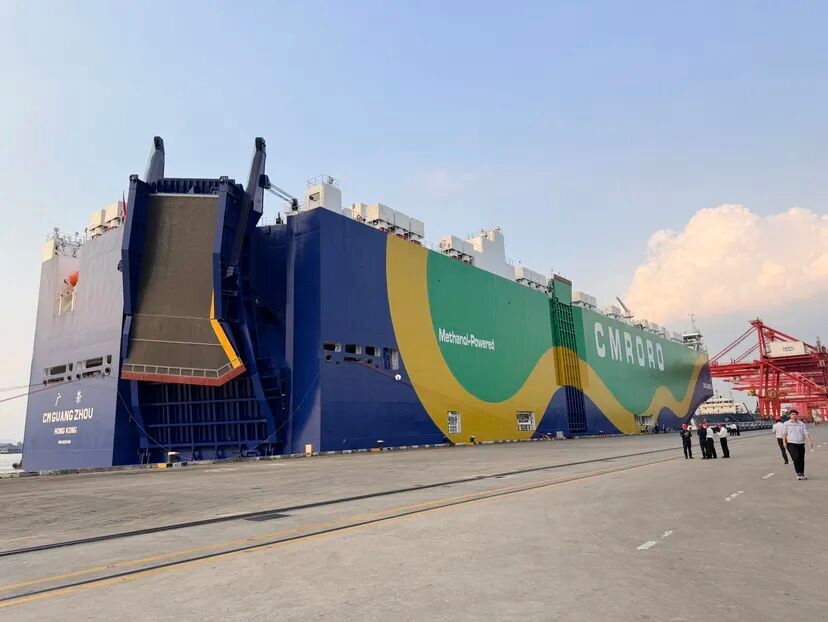
The vessel was built by Jiangsu-based shipbuilder Jinling Shipyard. As a new-generation methanol dual-fuel ro-ro vessel with a capacity for 7,800 vehicles, it ranks as the largest ro-ro ship ever to call at Nanjing Port. Benefiting from the Yangtze River’s 12.5m deep-water channel, the vessel can sail directly to Longtan terminal without lightering or transshipment. This overcomes the terminal’s past constraint of serving mostly small and medium-sized ro-ro vessels. Nanjing Maritime Safety Administration worked with multiple stakeholders to design a bespoke navigation support plan and implemented real-time monitoring during the maiden voyage to guarantee safe operations.
The maiden voyage highlights a full-chain collaboration: vessels built in Jiangsu, cargo loaded in Nanjing, and Chinese products shipped worldwide, reflecting the close ties between shipbuilding, port logistics and automotive exports. Multiple port authorities coordinated their efforts to support the operation. Customs supported upgrades to terminal inspection facilities, while the border inspection station rolled out a dedicated green channel for foreign trade, with tailored measures applied on a vessel-by-vessel basis to streamline loading activities.
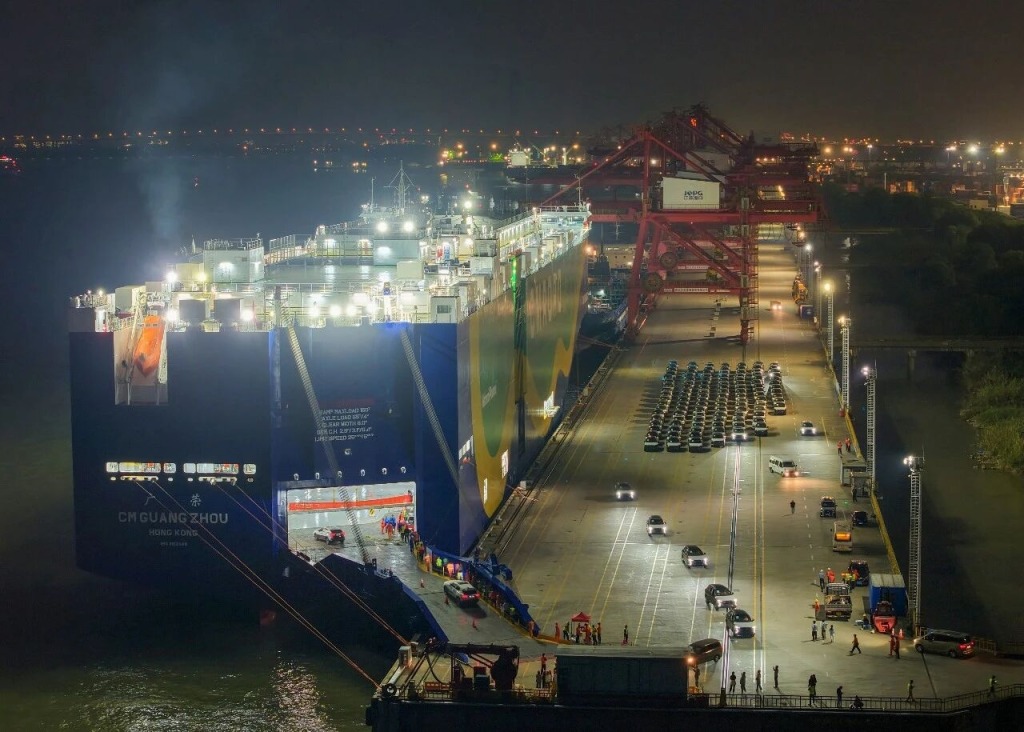
The newly launched Nanjing-Europe ro-ro route allows automakers from the Yangtze River Delta and Yangtze basin to load vehicles directly at Nanjing Port bound for Europe, removing the need for transshipment through major coastal ports. This cuts logistics lead times and lowers combined costs for transshipment and warehousing. Nanjing Port now runs three direct ro-ro foreign trade routes covering Europe, Mexico and the Middle East. The port handled around 13,900 exported vehicles in 2025. In the first nine months of 2026, export volume hit 29,100, reflecting robust growth.
Nanjing Port operates 24 international shipping routes connecting key hub ports across South America, North America, Europe, the Middle East and Southeast Asia. Nanjing is one of China’s leading advanced manufacturing hubs and the only city in East China designated as a national logistics hub across all five categories—port, land port, airport, production service and commercial service. Nanjing Port is evolving from a river-sea transshipment center into an ocean-going vehicle export hub, delivering reliable logistics services for manufacturers in its hinterland. It also provides well-developed port infrastructure and a solid industrial base for cross-border collaboration across the automotive, logistics, and supply chain sectors.