
A retinal imaging system developed in Nanjing has been installed at Boston Children’s Hospital, a Harvard Medical School-affiliated hospital—marking the first deployment of a Chinese‑made adaptive‑optics device at a world‑leading pediatric research hospital.

The system, called Mona IV, was developed by Robotrak Technologies Co., Ltd., a medical-device company based in Nanjing’s Jiangning District. Using adaptive optics, it captures in-vivo cellular-level images of the retina, providing a new tool for studying inherited retinal diseases in children—conditions that are often missed early and have long challenged clinicians worldwide.
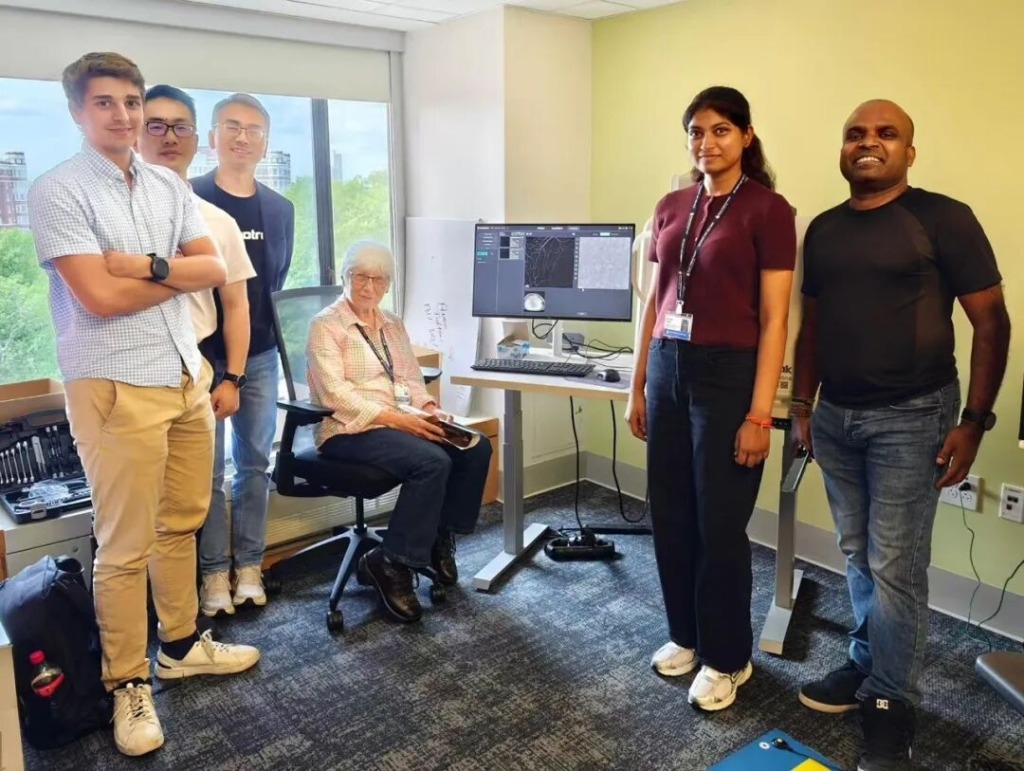
For years, such high-precision retinal imaging systems were found only in a handful of laboratories worldwide. Older-generation devices were bulky and expensive, limiting their use in routine clinical care and leaving little room for commercialization. Since its founding in 2017, Robotrak has focused on developing advanced ophthalmic instruments, backed by Nanjing and Jiangning District’s strategic push to build a high-end medical device cluster. The company now holds over 200 patents and intellectual property assets, and has obtained seven medical device registrations. After years of R&D, it has miniaturized the system and brought it to full commercial availability. In 2024, Mona IV received China’s NMPA approval as an innovative medical device under the country’s fast-track regulatory pathway, becoming the world’s first commercially available AO-SLO system for retinal imaging.

The journey from lab prototype to clinical deployment at Harvard-affiliated Boston Children’s Hospital took less than five years. Today, Mona IV is already in use at multiple leading universities and medical centers across Europe and North America, with positive feedback from ophthalmology specialists.
Jiangning District, a key biomedical hub in the Yangtze River Delta, is home to more than 600 companies across the medical-device and pharmaceutical supply chain. In the first half of 2026 alone, 51 new pharmaceutical and medical-device products received regulatory approval in the district—a testament to the region’s growing capacity to turn homegrown innovations into global products.